
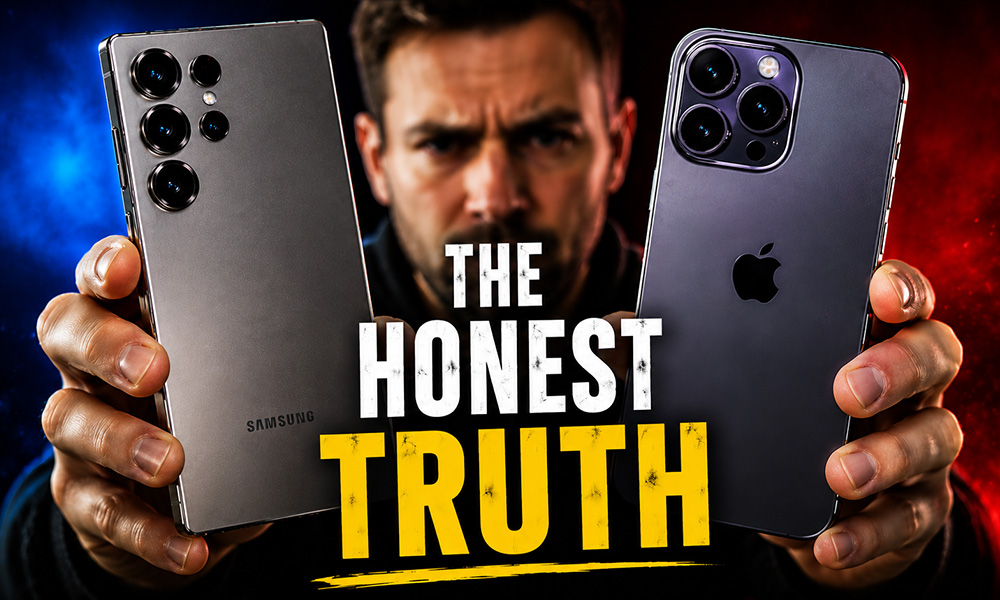
Everyone keeps saying the same thing right now: everybody is supposedly switching to iPhone. And a quick look at the current numbers seems to confirm exactly that. But once you dig deeper, the rest of the data tells a very different story — one most iPhone fans probably won’t love.
The Loyalty Numbers Favor Apple
Let’s start with what actually favors Apple: 96.4 percent of iPhone users stick with iPhone. That’s the highest figure ever recorded. Android users, by contrast, switch sides almost four times as often — 13.6 percent compared to 3.6 percent for Apple. At first glance, that looks like a clear win for Apple.
But the World Doesn’t Belong to Apple
Worldwide, 70 out of 100 smartphones run Android. Apple sits at roughly 29 percent. And the largest phone maker in the world in 2026 isn’t Apple — it’s Samsung, with 22 percent market share ahead of Apple’s 20 percent.
Even more surprising: of the few iPhone users who actually do switch, 7 out of 10 go straight to Samsung. Not to Google, not to some niche brand — to Samsung. Samsung is no longer a fallback option; it’s the actual destination. Fittingly, Samsung’s own loyalty rate has climbed from 74 to over 90 percent.
The Spec Sheet: Samsung Sweeps the Table
Line up the current flagships side by side — Galaxy S26 Ultra versus iPhone 17 Pro Max — and a clear pattern emerges:
- Battery: 5000 mAh on Samsung versus 4832 mAh on iPhone.
- Charging: 60 watts on Samsung versus just 42 watts on iPhone — noticeably faster to top up.
- Display: 498 ppi on Samsung versus 460 ppi on iPhone — visibly sharper.
- Camera: 200 megapixels versus 48 megapixels.
On top of that, there are two things the iPhone still simply doesn’t offer: a built-in S-Pen and foldable displays, which Samsung has been building for years now. On paper, Samsung clearly wins this round.
If you’re torn between the two flagships and end up going with the iPhone 17 Pro anyway, it’s worth protecting it properly from day one — check out our current ranking of the best iPhone 17 Pro cases before you buy.
The Trick You Won’t Find on the Spec Sheet
Now, to keep this fair — otherwise it wouldn’t be an honest comparison — despite the smaller battery, the iPhone often lasts longer in real-world use. Apple’s chip is simply far more efficient, delivering more performance per milliamp-hour.
Money tells a similar story in Apple’s favor: even though Android has more devices worldwide, significantly more money gets spent on iPhones. Roughly 70 percent of all app revenue flows through Apple — meaning Apple earns more with fewer users. And when it comes to resale, a used iPhone loses value more slowly than almost any Android device.
Update support is now roughly tied between the two. Apple used to be miles ahead here, but today Samsung also offers seven years of updates.
Artificial Intelligence: The Year’s Biggest Surprise
In the most exciting category — AI — something happens that almost nobody expected. Samsung’s Galaxy AI can translate phone calls live, in real time, while you’re speaking. Apple still can’t do that. In terms of satisfaction with phone AI, Samsung is actually ahead of Apple in 2026.
Apple’s strongest card, though, remains privacy: much of its AI processing happens directly on the device, so your data stays with you. If you want maximum privacy, Apple is the safer bet — that much has to be acknowledged. Still, Samsung is catching up here too, including built-in privacy screening directly in the display.
Freedom vs. the Golden Cage
On Android, you can change almost everything — default apps, home screen, even apps installed from outside the official store. On iPhone, Apple decides what’s allowed: a beautiful garden, but surrounded by high walls.
If you’re already deep into the Apple ecosystem and use your iPhone 17 Pro heavily on the go, it’s also worth thinking about screen protection, not just a case — our iPhone 17 Pro screen protector rankings show which options actually hold up.
The Honest Scoreboard
Apple wins on loyalty, efficiency, app revenue, resale value, and privacy. Samsung wins on market power, battery, charging, display, camera, AI, and freedom.
And that’s really the point of this whole comparison: maybe so many people stay with iPhone not because it’s objectively better across the board, but because the Apple ecosystem is a golden cage that’s hard to escape once you’re in it. iMessage, the Apple Watch, AirPods — everything pulls you in deeper. Even in Germany, where 65 percent of phones run Android, the single best-selling model is still an iPhone.
Neither one is the objectively clear winner. If you want the most seamless experience and maximum security, go iPhone. If you want the best hardware, the most features, and real freedom, go Samsung. The more honest question in the end is: are you on iPhone because it’s genuinely better for you — or because you’ve simply never tried anything else?