
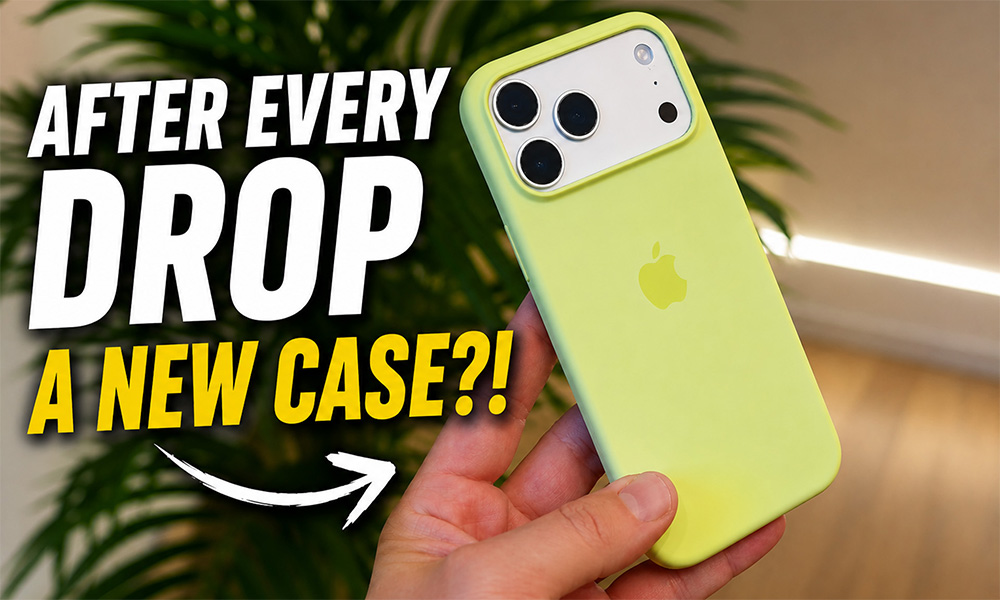
The original Apple Silicone Case is probably one of the most popular iPhone cases in the world. Every single year, Apple sells millions of them — even though this tiny piece of silicone costs almost 50 dollars.
And honestly, that’s kind of crazy.
Because it feels like everybody knows the same problem: After the first serious drop, the case already looks destroyed. Chipped corners, scratches and damaged silicone are almost part of the Apple Silicone Case experience at this point.
And somehow, people still buy it again every single year.
So I wanted to know: How well does Apple’s most popular case actually protect your iPhone? And more importantly: How bad does it look after a real drop test on concrete?
So we put a brand-new iPhone 17 Pro Max into the original Apple Silicone Case and started testing.
First Impressions of the Apple Silicone Case
To be fair to Apple, the case feels incredibly good in the hand. That is probably the main reason why it keeps selling so well every year.
The soft-touch silicone feels premium, the buttons are extremely clicky and precise, and MagSafe works perfectly as expected.
The case also includes:
- Hard case structure
- Soft inner lining
- Display protection
- Camera protection
- MagSafe support
- Dedicated camera button
- Excellent buttons
- Perfect cutouts
- Compatibility with all screen protectors
For this test, I once again used a large edge-to-edge screen protector from ROXX that fully covers the corners of the display.
If you are currently looking for a new case, you should definitely check out this guide about buying the best iPhone 17 Pro cases.
The Biggest Problems With Apple’s Silicone Case
Of course, the case also has some major downsides.
The biggest problem is durability. The silicone attracts dust and dirt very quickly and starts looking worn after only a short time.
The corners are especially sensitive. That’s where visible damage appears very quickly after harder drops.
And then there’s obviously the price. Spending almost 50 dollars on a silicone case is expensive — especially now that many cheaper alternatives already offer excellent protection.
If you also want proper display protection, you should definitely check out this comparison of the best iPhone 17 Pro screen protectors reviewed.
The Real Drop Test
Now things got interesting.
We dropped the iPhone 17 Pro Max with the Apple Silicone Case three times onto concrete from 1.20 meters.
We also measured the impact force so we could compare the results with other cases later.
The Results
- 116 m/s
- 162 m/s
- 109 m/s
The average result was around 12.9G.
And this is where things became really interesting.
Because even though the case itself got damaged relatively quickly, the iPhone survived completely fine.
The soft silicone absorbs impacts surprisingly well. The low G-force numbers clearly show that the case does a very good job at reducing the force of the impact.
The problem is simply that the case itself suffers a lot in the process.
After harder drops, it quickly starts looking damaged and worn — even though it actually protects the phone very well.
Is Apple’s Silicone Case Worth It?
Honestly, this is probably one of Apple’s most complicated products.
Because when it comes to protection, it actually performs much better than most people would expect.
The low G-force numbers clearly show that the silicone absorbs impacts effectively and protects the iPhone surprisingly well.
The real issue is the case itself.
If you want a case that still looks brand new after months of use, you will probably be disappointed.
But if you care about great hand feel, strong MagSafe magnets and solid protection, you might still end up loving it.
At the end of the day, one question remains:
Do you really want to buy a new $50 case after every serious drop?