
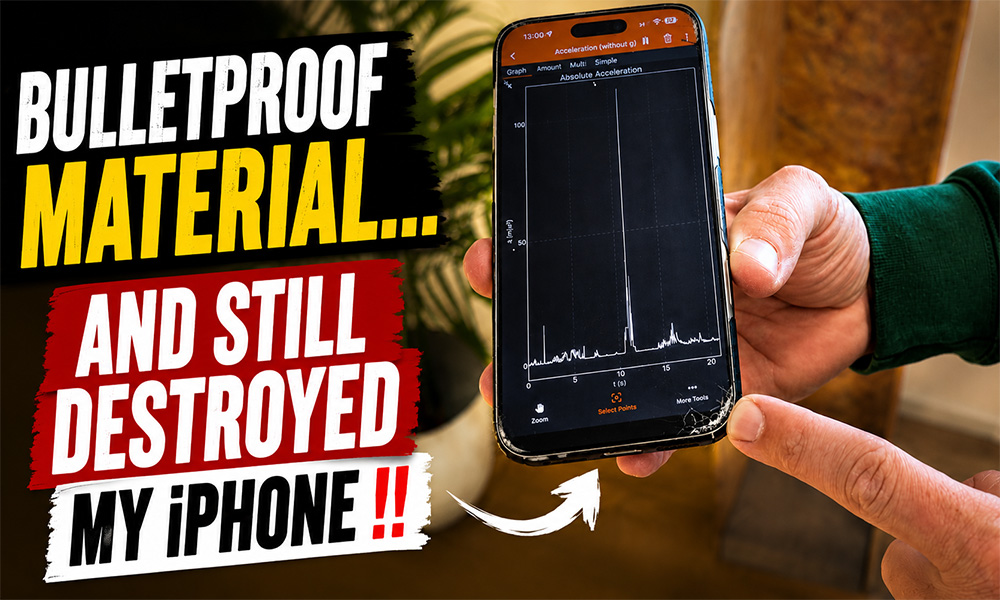
This iPhone case is made out of Kevlar.
Yes — the exact same material that is used in bulletproof vests.
And that immediately made me wonder:
Is this just cool marketing… or does Kevlar actually protect an iPhone better?
So I decided to test exactly that with a brand-new iPhone 17 Pro Max worth around €1450.
Even before starting the test, I already had a bad feeling. Because this case is incredibly thin and weighs only 22 grams.
That sounds impressive at first — but it also made me question how much real protection this thing could actually provide.
First Impressions of the Benks Kevlar Case
Visually, the case honestly looks extremely premium.
The Kevlar texture gives it a modern and technical look that feels very different from typical silicone cases or bulky rugged cases.
Because of its low weight, the case almost feels unrealistically light in the hand.
At only 22 grams, this is definitely one of the lightest cases we have tested so far.
Despite the thin design, the case still includes:
- Camera protection
- MagSafe support
- Ultra-thin construction
- Premium Kevlar design
- Compatibility with all screen protectors
For this test, I once again used a large edge-to-edge screen protector from ROXX that fully covers the corners of the display.
If you are currently searching for a new case, you should definitely check out this guide about buying the best iPhone 17 Pro cases.
The Biggest Problems With the Kevlar Case
And unfortunately, this is where the problems begin.
Because while Kevlar sounds incredibly impressive, the material actually provides far fewer advantages in a phone case than most people would expect.
The case has no soft inner lining, no reinforced corners and all buttons remain fully exposed.
Because of that, the case feels much more like a stylish scratch protector than a serious protective case for hard drops.
And for an expensive phone like the iPhone 17 Pro Max, that is obviously risky.
The price is also difficult to justify. Kevlar is an expensive material, but in this case it honestly feels more like marketing than a real advantage.
If you also want proper display protection, you should definitely check out this comparison of the best iPhone 17 Pro screen protectors reviewed.
The Real Concrete Drop Test
Now things got serious.
We dropped the iPhone 17 Pro Max with the Benks Kevlar Case onto concrete from 1.20 meters.
Once again, we also measured the impact force so we could compare the results with other cases later.
And honestly…
Even before the first drop, I already had the feeling that this was going to end badly.
The Results
After the second drop, we actually had to stop the test.
The structure of the case cracked and could no longer properly hold the iPhone.
The risk of completely destroying the brand-new phone was simply too high.
The measured G-forces were also extremely strange.
The sensors only showed around 11.3G — which honestly does not really make sense.
There is even a chance that the heavy impacts already damaged the sensors inside the iPhone itself.
And once again, one thing became very clear:
Without the large ROXX screen protector, the display probably would have shattered after the very first drop.
Is a Kevlar Phone Case Actually Worth It?
Honestly, this test clearly shows that Kevlar in smartphone cases is mostly marketing.
Yes, the material is extremely light.
Yes, the case looks very cool.
But when it comes to actual protection, Kevlar does not really provide major advantages here.
This case is mainly built for people who want the thinnest and most stylish design possible — not for people who want maximum protection.
If aesthetics matter more to you than real drop protection, you might still love the Benks Kevlar Case.
But if protection is your main priority, there are much better options available.
Kevlar may work great in bulletproof vests.
But in phone cases… apparently not so much.